Cluster Hosting — Built for High Traffic, Zero Downtime, Multi-Region Redundancy
Cluster hosting is the infrastructure model used by the highest-traffic websites. Instead of relying on a single server that becomes a single point of failure, a clustered setup distributes your site across multiple nodes — with load balancing, automatic failover, and Redis caching — so that traffic spikes, hardware failures, and maintenance windows never take you offline.
WebPulseLab provides fully managed cluster hosting for ecommerce stores, high-traffic publishers, SaaS platforms, and any business-critical website that needs enterprise-grade infrastructure without the enterprise complexity or cost. Our clusters start from £99/month and are built, monitored, and managed by our UK-based team from day one.

Why Ecommerce Businesses Need Scalable Cluster Hosting
Every lost second costs revenue. Research consistently shows that a one-second delay in page load can reduce conversions by up to 7%. On a high-traffic ecommerce site, an unstable server during peak demand is not an inconvenience — it is a revenue disaster.
Standard hosting solutions are designed for predictable, low-to-moderate traffic. They work fine when your store is small. But as your catalogue grows, your marketing campaigns generate more traffic, and seasonal peaks become more intense, a single server becomes a critical single point of failure.
A scalable ecommerce cluster solves this by:
- – Distributing traffic across multiple web server nodes so no single machine becomes overwhelmed
- – Automatically rerouting requests if any node becomes unavailable
- – Scaling compute and database resources dynamically as demand rises
- – Keeping your store online during maintenance, updates, and deployments
This is the infrastructure model used by large ecommerce operations — and WebPulseLab makes it accessible to UK businesses of all sizes, starting from £99/month.
Enterprise-Grade Cluster Architecture for Online Stores
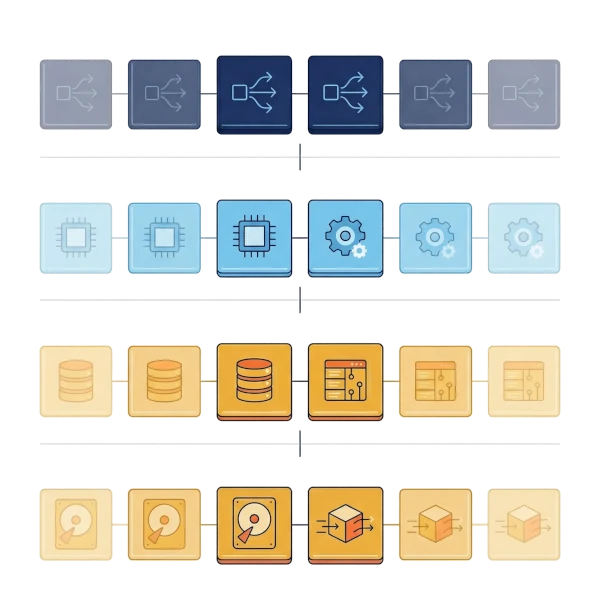
Our ecommerce cluster hosting is built on a multi-layered architecture designed for both maximum performance and fault tolerance. Each layer is independently scalable, redundant, and monitored around the clock.
Load Balancing Layer
All incoming traffic passes through a dedicated load balancer that intelligently distributes requests across multiple web server nodes. This prevents traffic bottlenecks during peak periods — such as during a promotional campaign or a flash sale — and automatically redirects users if any node becomes unavailable. The result is a seamless shopping experience, even during your busiest trading hours.
Compute Layer — Web Servers Optimised for Ecommerce
Your ecommerce application runs across multiple identical server instances, each configured for your platform of choice — Apache, Nginx, or LiteSpeed. Whether you are running WooCommerce with thousands of products, a headless Magento setup, or a custom PHP or Node.js storefront, each compute node delivers consistent response times and handles concurrent user sessions efficiently.
Scalable Application and Database Layers
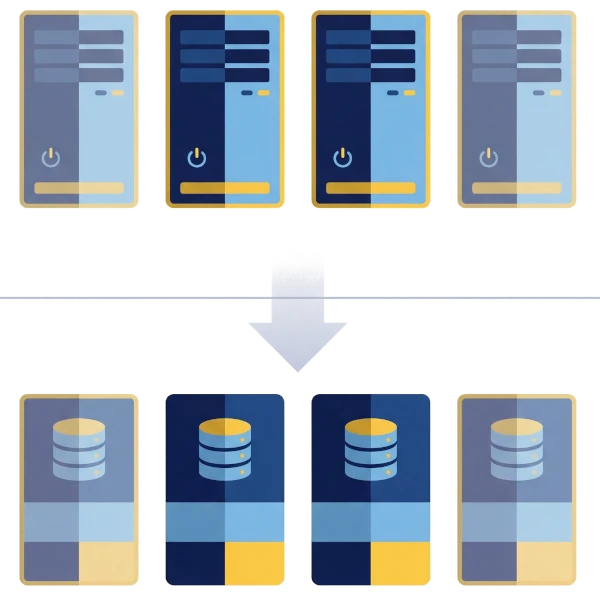
Caching Layer — Faster Pages, Better SEO
We integrate a dedicated caching layer using Redis or Memcached. This dramatically reduces database load, accelerates dynamic content delivery, and improves page load times across your entire storefront. Faster pages directly improve your Google Core Web Vitals scores — a confirmed ranking factor — meaning better organic search visibility and more traffic from search engines.
Multi-Region High Availability — Stay Online During Peak Trading

All WebPulseLab clusters are deployed across two independent geographic regions. If one region experiences an outage, network issue, or hardware failure, your ecommerce store continues to serve customers from the second region without interruption.
This multi-region setup is essential for UK ecommerce businesses that:
- – Run seasonal campaigns (Christmas, Black Friday, summer sales)
- – Operate 24/7 with customers across different time zones
- – Cannot afford downtime during business-critical periods
- – Run marketing campaigns that generate unpredictable traffic spikes
Updates, patches, and deployments are performed with near-zero downtime, so your customers never encounter maintenance pages or error messages during the shopping experience.
Clusters are horizontally and vertically scalable — meaning you can add more nodes to handle traffic growth, or temporarily scale down during quieter periods, keeping infrastructure costs aligned with your actual business demand.
Ecommerce Platform Compatibility
Our clustered hosting infrastructure is compatible with the most widely used ecommerce platforms in the UK market:
- – WooCommerce — fully optimised cluster environments for high-volume WordPress/WooCommerce stores with large product catalogues and concurrent orders
- – Magento / Adobe Commerce — clustered infrastructure built to handle Magento’s resource-intensive operations at scale
- – PrestaShop — dedicated application nodes for stable PrestaShop performance under high traffic
- – Custom PHP, Node.js, and headless ecommerce — bespoke cluster configurations for custom-built storefronts and API-driven ecommerce architectures
Read the difference about whether you need WordPress help, hosting, or both?
If your ecommerce platform is not listed, contact us — we configure clusters around your technology stack, not the other way around.
Cluster Hosting vs VPS vs Dedicated: Which Do You Need?
| Shared Hosting | VPS | Dedicated Server | Cluster Hosting (WebPulseLab) | |
| Single point of failure | Yes | Yes | Yes | No — multi-node |
| Handles traffic spikes | No | Limited | Limited | Yes — auto-distributes |
| Uptime during node failure | Site goes down | Site goes down | Site goes down | Traffic rerouted automatically |
| Suitable for Black Friday | No | No | Risky | Yes |
Cost | £5–£20/mo | £20–£80/mo | £80–£300/mo | From £99/mo |
| Management required | Minimal | Moderate | High | Fully managed |
If your website generates revenue, relies on consistent uptime, or experiences variable traffic, a clustered setup is the right infrastructure tier. VPS and dedicated servers are adequate for low-to-medium, predictable traffic — but they become a liability when demand is unpredictable.
Who Uses Cluster Hosting?
WebPulseLab’s cluster infrastructure is used by a range of high-traffic websites and business-critical platforms — not just ecommerce stores.
- Ecommerce stores — WooCommerce, Magento, and PrestaShop stores that experience traffic spikes during seasonal campaigns, product launches, or flash sales.
- High-traffic content sites and publishers — news sites, magazines, and high-volume blogs that experience traffic surges from viral content, social shares, or PR coverage.
- SaaS platforms and web applications — business-critical applications where downtime means lost customers, failed transactions, or SLA breaches.
- Agencies managing multiple client sites — agencies that need isolated, scalable infrastructure for client websites without a shared-hosting single-point-of-failure risk.
- Marketing campaign landing pages — businesses running paid advertising or large email campaigns that direct concentrated traffic to a single URL at a predictable time.
If your platform falls outside these categories but has critical uptime requirements, contact us to discuss a bespoke configuration.
How Much Does Cluster Hosting Cost in the UK?
UK cluster hosting costs vary significantly depending on the number of nodes, geographic regions, support level, and the complexity of your platform. Here is a realistic market overview:
| Setup | What You Get | Typical Cost |
| DIY cloud cluster (AWS/GCP) | Full control, but full responsibility. Engineering time not included. | £300–£2,000+/mo plus DevOps cost |
| Enterprise managed cluster | Custom SLA, dedicated account management, white-glove onboarding. | £1,500–£5,000+/mo |
| WebPulseLab cluster (managed) | Multi-node UK infrastructure, managed 24/7, free migration, no lock-in. | From £99/month (Premium plan) |
| WebPulseLab custom cluster | Load balancing, multi-region, auto-scaling, SLA-backed support. | £600–£3,500/mo depending on spec |
The key difference between WebPulseLab and enterprise alternatives is that we remove the engineering overhead. You do not need an in-house DevOps team — we handle the architecture, monitoring, scaling, and incident response.
Security, Monitoring, and Daily Backups
Security and reliability are not add-ons — they are embedded into every layer of every cluster we build.
Security-first infrastructure includes:
- – Network isolation between cluster layers to prevent lateral movement
- – Hardened server configurations aligned with UK hosting security best practices
- – Controlled service-to-service access with firewall rules at every layer
- – SSL certificates included across all plans
24/7 monitoring and proactive alerts — our advanced monitoring system tracks uptime, response times, database performance, and resource utilisation in real time. We identify and resolve issues before they affect your customers or your orders.
Daily backups — every cluster is fully backed up daily, covering databases, application files, and storage nodes. In the event of an incident, recovery is fast and reliable, ensuring business continuity and data protection at all times.
Performance, Core Web Vitals, and SEO Benefits
Infrastructure is not just an operational concern for ecommerce — it is an SEO factor. Google’s Core Web Vitals (Largest Contentful Paint, Interaction to Next Paint, and Cumulative Layout Shift) are influenced directly by server response time, page load speed, and infrastructure reliability.
A slow hosting environment limits how well your product pages, category pages, and landing pages rank in Google Search — regardless of how well they are optimised on-page.
WebPulseLab’s ecommerce cluster hosting delivers:
- – Sub-100ms Time to First Byte (TTFB) through load balancing and caching
- – Stable page load performance under concurrent user sessions
- – No resource contention from neighbouring websites (unlike shared hosting)
- – Consistent uptime that protects crawl budget and indexing frequency
When your infrastructure performs, your SEO performs alongside it.
Frequently Asked Questions
Is cluster hosting suitable for WooCommerce stores?
Yes. Our clusters are specifically optimised for WooCommerce and WordPress. We configure the web server, database replication, object caching, and file synchronisation to work seamlessly with WooCommerce’s architecture — including large catalogues, complex variable products, and high volumes of simultaneous orders.
How does cluster hosting handle Black Friday or flash sale traffic?
The load balancer distributes all incoming requests across multiple web server nodes, so no single server is overwhelmed. If demand exceeds current capacity, nodes can be scaled horizontally in real time. This means your store stays responsive during peak traffic events that would crash a single-server setup.
Which ecommerce platforms do you support?
We support WooCommerce, Magento, PrestaShop, and custom PHP or headless ecommerce platforms. Contact us to discuss your specific stack and we will configure the cluster accordingly.
What happens if one server in the cluster fails?
Traffic is automatically rerouted to the remaining healthy nodes within seconds, with no action required on your part. Because the cluster is deployed across two regions, even a full regional failure does not take your store offline.
Does cluster hosting improve my Google rankings?
Indirectly, yes. Faster page load speeds, better Core Web Vitals scores, consistent uptime, and strong TTFB all contribute positively to Google’s ranking signals. Our infrastructure is built to pass Core Web Vitals assessments and maintain optimal performance under real-world ecommerce conditions.
How quickly can a cluster be deployed?
Typical deployment timelines range from several days to two weeks depending on the complexity of your ecommerce platform and data migration requirements. We handle the full technical setup so your team can stay focused on the business.
Build Ecommerce Infrastructure That Scales Without Limits
If your ecommerce business is growing and your current hosting is struggling to keep up, the answer is not a bigger single server — it is a properly architected cluster.
WebPulseLab designs, deploys, and manages scalable cluster solutions for ecommerce businesses across the UK. From WooCommerce stores handling thousands of daily orders to custom platforms processing millions of requests, we build infrastructure that performs under pressure and scales with your growth.
Get in touch today to discuss your ecommerce hosting requirements. We will assess your current setup and propose a cluster architecture matched to your traffic, platform, and growth projections.
Simple, transparent pricing
All plans include free migration, dedicated servers, SSL and 24/7 uptime monitoring. Cancel anytime.
For small and local business websites with low to medium traffic.
For active business sites, WooCommerce and e-commerce stores.
For business-critical, higher-traffic and revenue-generating platforms.
Need enterprise-grade infrastructure?
Load balancing, auto-scaling, multi-region redundancy and SLA-backed incident response for high-traffic platforms. Typically £600–£3,500/month — compare that to building an in-house DevOps team.
Not sure which plan is right for you? Book a free consultation and we’ll make an honest recommendation — no obligation. Talk to us →